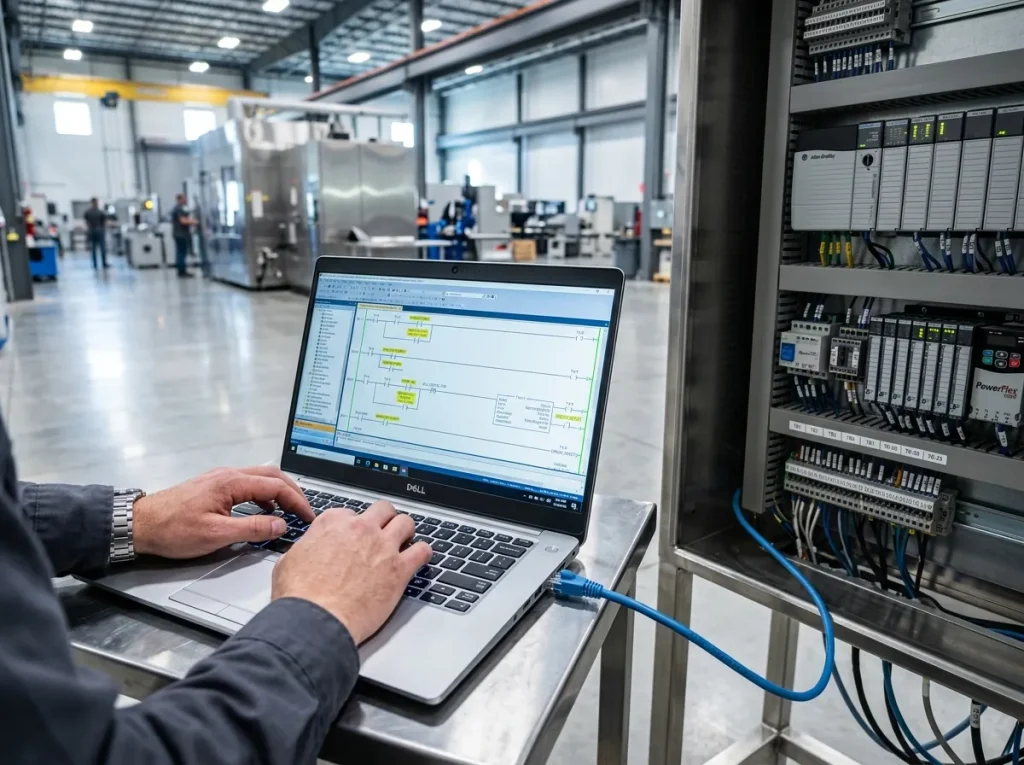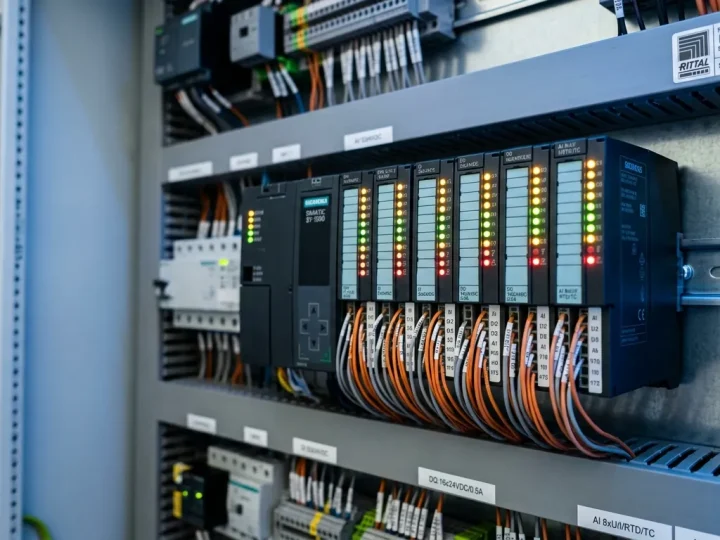

PLCs (Programmable Logic Controllers) and HMIs (Human-Machine Interfaces) are two key components widely used in industrial automation systems. A PLC is a type of computer used to control machines and equipment in factories and other industrial plants. An HMI is a graphical interface that allows operators to monitor and control PLCs.
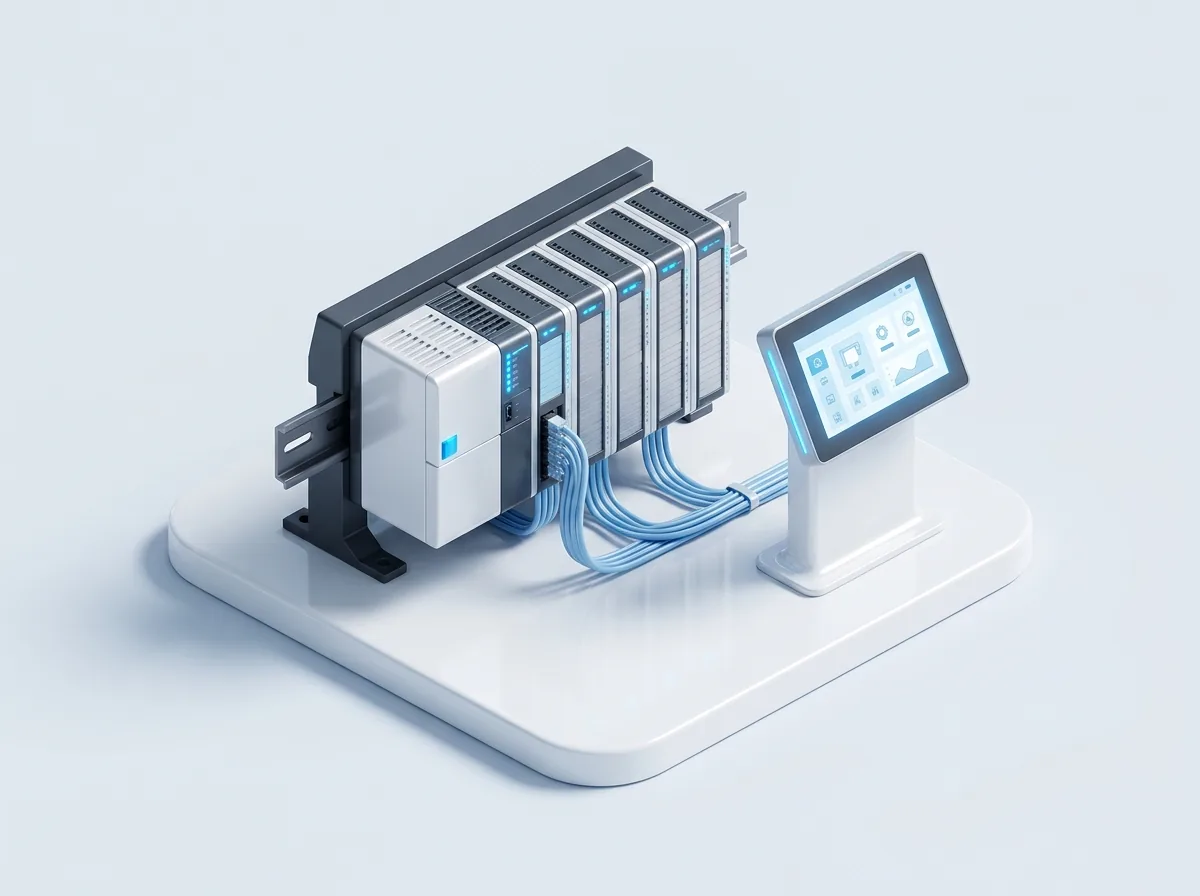
PLCs can be programmed to perform a specific function using a predefined programming language. These are usually graphical or text-based languages such as Ladder Logic, Function Block Diagram (FBD) or Structured Text (ST). By performing data acquisition, process control and automation functions, PLCs help increase efficiency on the production line.
HMIs are graphical interfaces used to monitor, control and manage the operations performed by PLCs. They allow users to monitor and control all PLCs and sensors on a production line. With touchscreens and user-friendly interfaces, HMIs are easy to use, so operators can carry out many different tasks with ease.
Using PLCs and HMIs together makes industrial automation systems run more efficiently. PLCs collect and process data from sensors and other devices, while HMIs present this data to users and allow operators to take action. As a result, production line efficiency in industrial plants increases and operating costs fall.
In conclusion, PLCs and HMIs are essential components of industrial automation systems. PLCs help control sensors and other devices on the production line and collect data, while HMIs allow operators to monitor and act on that data. Used together, PLCs and HMIs help increase production line efficiency and reduce operating costs.